
Statewide web design agency · remote design for California businesses
California Web Design Agency
Selling across California means serving many markets under one name: 58 counties, more than 200 languages spoken and customers who reach you on a phone. B9 Solution designs each statewide site from scratch around your goals and brand identity, so a customer in any region sees what you offer for them.
- Mobile and desktop designed together
- Ready for our developers or yours
- 1One clear next stepThe main action is visible without scrolling or hunting.
- 2Services you can scanEach service has its own path, so visitors find theirs quickly.
- 3A phone layout of its ownThe mobile version is designed alongside the desktop one, not shrunk from it.
- 2020
- Founded
- 30+
- Countries served
- 50+
- People across B9’s delivery team
Our approach
Websites Designed Around Your Business Goals
A statewide California business has several jobs to do at once: show a customer in one region that you work there, show another the same, and keep the whole company recognizable as one brand. We decide which job comes first, then plan the pages, what each says first and the action it leads to.
On brand from the first layout
Colors, type and imagery follow your brand identity, so the site looks like your business and no one else’s.
Easy to use on every screen
Clear navigation and readable layouts that adapt from small screens to large ones, so visitors find what they came for.
Structured to be found and acted on
Pages follow a hierarchy search engines can read, and each one leads to a single clear next step.
What we design
California Web Design Services
Websites for businesses that serve California beyond a single town: a first custom design, a redesign, an online store or a WordPress build, each planned around the regions and languages of your customers.
Custom web design
Built from scratch around your brand identity, so one site speaks for the whole state: a shared look and message, with regional pages, language choices and contact routes added only where they earn their place.
- One brand
- Regional pages
- Language choice
Website redesign
For a business that has outgrown one town: keep the pages that already work, retell the service-area story and give each region a clear way into the site.
- Broken pages
- Service areas
- One clear action
Mobile and responsive design
Layouts designed for phone, tablet and desktop together, so the language choice, service areas and contact route stay within reach for a customer anywhere in the state, without pinching or zooming.
- Mobile-friendly
- Language choice
- Tap-to-call
Ecommerce web design
Online stores for sellers who ship across California: delivery areas, returns and checkout planned on WooCommerce or Shopify, with a plain note on how tax is applied, since rates differ by district.
- WooCommerce
- Shopify
- Delivery areas
WordPress development
WordPress sites your own team can keep current: adding a region, a service or a language page can be a content task, not a rebuild, with the plugins the site needs and no more.
Web development services- WordPress
- Editable pages
- Plugins as needed
SEO-friendly site structure
A page hierarchy search engines can follow across regions: services first, regional pages only where they differ, with clear headings and internal links in place. Audits and keyword research are separate B9 services.
SEO services- Page hierarchy
- Regional pages
- Internal links
Common problems
Is Your Website Holding Your Business Back?
Common website problems cost a statewide business in particular ways: the customer two counties away who cannot tell whether you serve them, the reader who prefers another language, the buyer weighing up owner-run firms.
Outdated Website Design
- The problem
- The site still describes the business as it was when it served one town: old service areas, one address, no newer regions.
- Why it matters
- In a state of 58 counties, a visitor outside the areas named on the page may assume you do not work there.
- How we address it
- We refresh design and content together, restating your regions, services and contact details so the site matches the business today.
Slow Website Performance
- The problem
- Pages are slow to appear, or jump around while they load.
- Why it matters
- People on a phone have little patience for a page that makes them wait.
- How we address it
- We build with page weight in mind: sized images, tidy code and only the plugins or scripts a page needs.
Poor Mobile Experience
- The problem
- Language choices, service areas and the phone number sit in a desktop layout that needs pinching and scrolling on a small screen.
- Why it matters
- With more than 200 languages spoken across California, a reader who prefers another one needs the language choice within thumb reach.
- How we address it
- We design phone, tablet and desktop layouts together, keeping the language choice, your service areas and a tap-to-call number close at hand.
Unclear Calls to Action
- The problem
- Several buttons compete, and a visitor cannot tell whether to call, book or request a quote for their own region.
- Why it matters
- A business working in several counties often handles inquiries differently by area, so one vague button sends people down the wrong path.
- How we address it
- One priority action leads each page, and the form is planned to ask for county or region so inquiries can be sorted.
Weak Website Structure
- The problem
- One page lists every region in a paragraph, or dozens of county pages repeat the same text with only the name changed.
- Why it matters
- The state’s economic plan sorts California into 13 regions with their own goals; visitors want their region, not a list of all.
- How we address it
- We map service pages first, group your areas into regions and add a regional page only where the offer truly differs.
Confusing Navigation
- The problem
- The menu lists every service, region and language at once, so a visitor scrolls past what they came for.
- Why it matters
- Californians arrive from different regions speaking many languages, so the menu must make sense to all of them at a glance.
- How we address it
- Menu labels follow the words visitors use, such as Services, Areas Served and Languages, and sit in the same place throughout.
The next section shows these fixes on one fictional site, before and after.See the before and after
Website redesign
See what a redesign changes
A statewide redesign starts with a map of what exists: which pages draw visits from which regions, where one page tries to serve every county, and which languages or contact routes are missing. We list those first, then rebuild around what already works.
No redesign can promise rankings, but a page map made before launch helps stop regional pages being merged or dropped by accident.
What stays
- Region pages that already draw visits
- Service pages customers rely on
- Working URLs, or redirects where they change
What changes
- One page trying to serve every county
- Missing language and contact routes
- Competing forms and calls to action
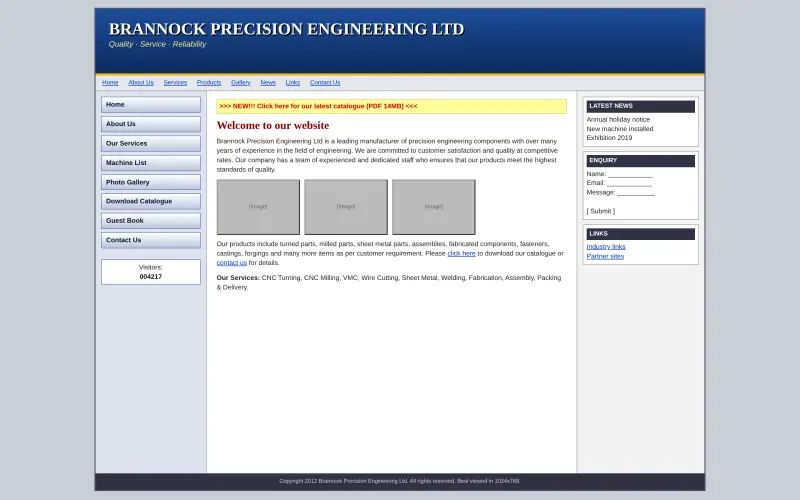
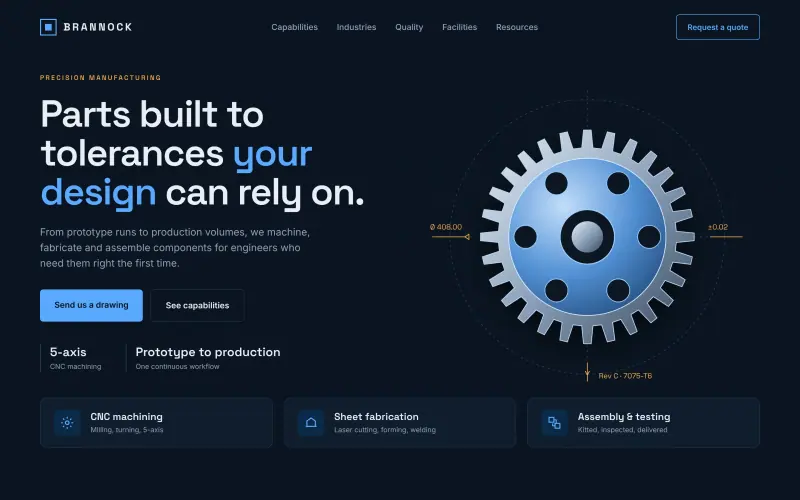 BeforeAfter
Before: Dense text, small links, no clear next step.After: One headline, one main action, readable type.
Original concept designsNot client work
Responsive design
Built to work on every screen
A customer in any region may open the site on a phone, a tablet or a desktop. Fluid grids, flexible images and media queries reflow each layout, so language choices and contact routes stay within reach.
- DesktopFull navigation, three service columns and the inquiry panel beside the headline.
- TabletNavigation condenses and the services reflow to two columns.
- PhoneA menu button, one column and a call button within thumb reach.
Concept website for a fictional company. Choose a size or drag to resize.
Tools and technology
The Tools & Technologies Behind Our Websites
Every website passes through three stages: design, platform and build. Here are the tools we use at each one, and what each does for your project.
01Design
Design & prototyping
- Figma: Design, wireframes and prototyping
- Adobe XD: UI/UX design and prototyping
- Adobe Photoshop: Image editing and graphic design
Wireframes, visual design and clickable prototypes, so you can review how the site will look and work before development starts.
What it produces- Wireframes
- Page designs
- Clickable prototype
02Platform
CMS & ecommerce
- WordPress: Flexible pages and content
- WooCommerce: Online stores on WordPress
- Shopify: Hosted online stores
Platforms that let your team keep pages, posts and products up to date after launch.
What it produces- Page templates
- Product pages
- Editable content
03Build
Custom web development
- HTML: Page structure
- CSS: Layout and styling
- JavaScript: Interactive features
- React: Component-based interfaces
- PHP: Server-side development
- Bootstrap: Responsive website development
- Next.js: Web development
- Astro: Website development
For sites that need more than a ready-made platform: hand-built layouts and interactive features, with only the code a page needs.
What it produces- Custom layouts
- Interactive features
- Tidy, lean code
Tool and platform names and logos belong to their respective owners and are used here only to say what we build with.
Adobe and Photoshop are either registered trademarks or trademarks of Adobe in the United States and/or other countries. The WordPress® trademark is the intellectual property of the WordPress Foundation. HTML5 logo by W3C, CC BY 3.0. JS logo © 2011 Christopher Williams and Manuel Strehl, MIT license. PHP logo by Colin Viebrock, CC BY-SA 4.0. Vercel, the Vercel design, Next.js and related marks, designs and logos are trademarks or registered trademarks of Vercel, Inc. or its affiliates in the US and other countries.
Our work
Our Work
Original concept designs created by B9 to show our approach to structure, layout and detail. They are not client projects.
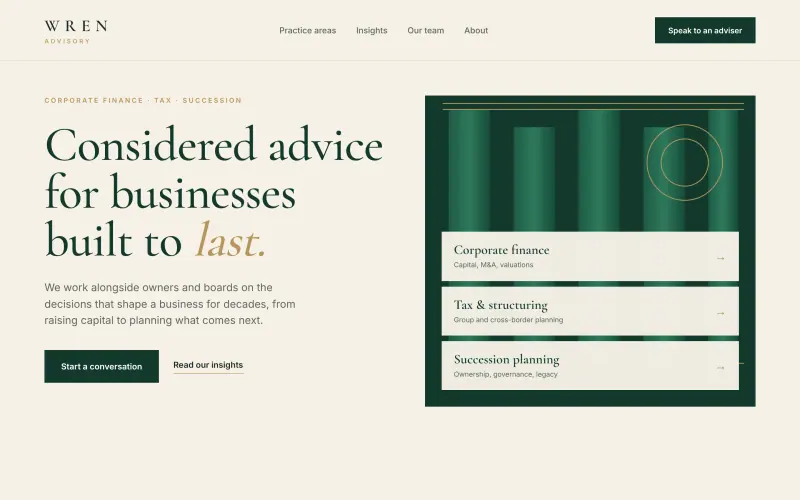
Wren Advisory Concept design
A fictional advisory site with one path per service and a plain statement of the regions covered: a structure for a California practice serving clients across the state.
- Professional services
- Service paths
- Regions covered
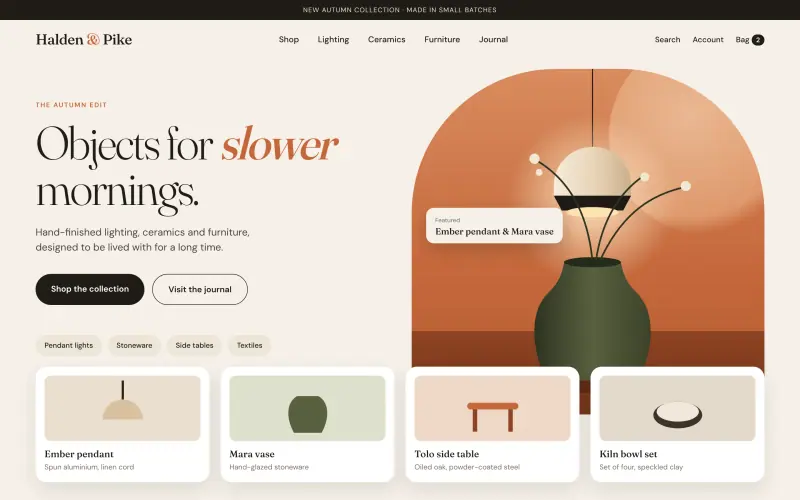

Halden & Pike Concept design
A fictional store with filters and a short route to checkout: a pattern for a California seller whose customers live in many counties and shop from a phone.
- Online store
- Online store
- Delivery areas
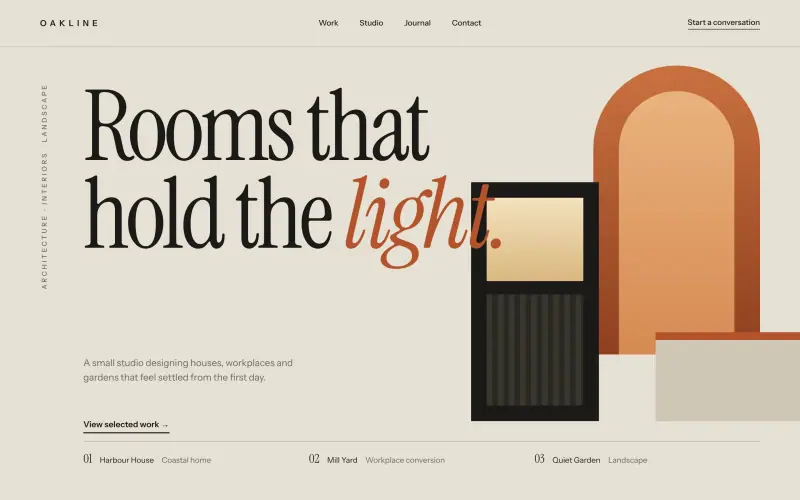
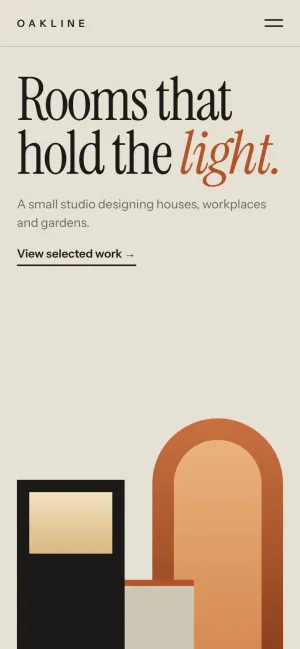
Oakline Concept design
A fictional project index where finished work leads and the area covered sits beside it, for a builder or trade working in several California regions.
- Studio portfolio
- Portfolio
- Area covered
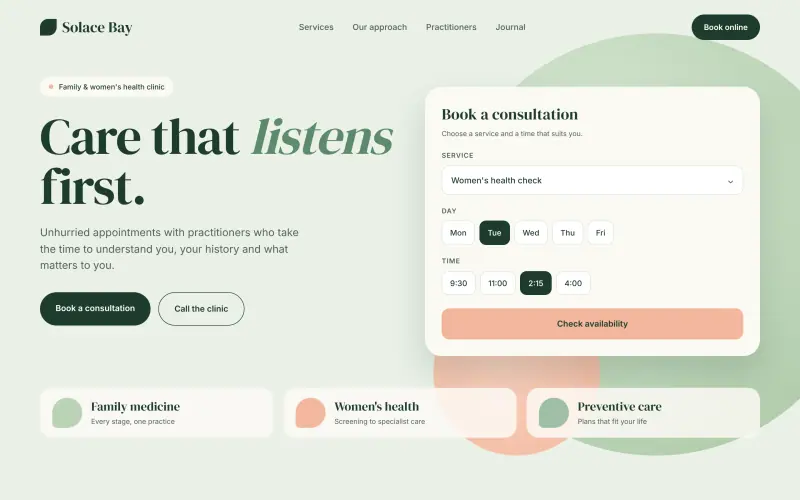
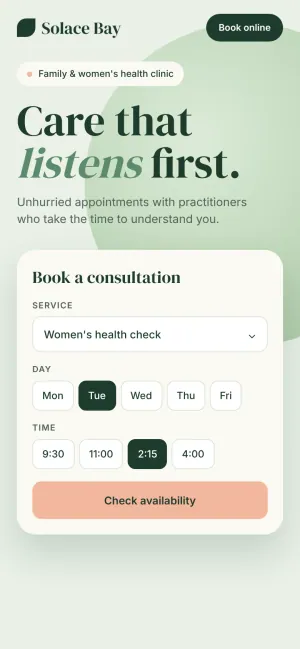
Solace Bay Concept design
A fictional clinic site with booking in the first screen: a pattern for a California practice with several locations for a patient to choose between.
- Booking website
- Booking
- Locations
Looking for client work? Browse B9 case studies
Process
Our Web Design Process
Five stages, each with something you can review before the next one begins.
Goals and audience
We listen to your concerns and goals, then define who the site is for and what its visitors are trying to do.
BriefStructure
A sitemap and page plan that protects the pages people already find through search.
Page planWireframes
Black-and-white layouts that settle the order of content and where each call to action sits.
WireframesVisual design
Each page type designed for small and large screens alike, in your brand identity.
DesignsHandoff
One package with everything a developer needs, whether that is our team or yours.
Build-ready files
From you we need your goals, your brand assets, a login to your current site and its analytics, and a decision-maker. We can plan the content with you or work from yours.
Need it built too? Web development services
Why B9
Why Choose B9 Solution As Your California Web Design Agency
We listen to your concerns and goals first. Then we plan the pages, design them for every screen and build the site, so it says what your business offers in a way that fits your brand.
- 01Plan
- 02Design
- 03Build
- Plan
Planning before design
We settle your audience, goals and page plan before any layout is drawn, so design time goes to the pages that matter.
- Plan
Practical website architecture
A hierarchy that matches how people look for your services: one page per service, clear headings and internal links where they help.
- Design
Mobile and desktop experiences
Mobile and desktop layouts are designed together, so the next step is as clear on a small screen as on a large one.
- Design
Clear visitor journeys
We map the route from a visitor’s first screen to your inquiry form, so each page answers a question and points to the next step.
- Build
Design and development, coordinated
Designers and developers work from the same plan, so what you approve is what gets built.
- Build
Handover planned from the start
The finished site, its files and the access your team needs are agreed in your proposal. You generally own your website, domain and accounts, subject to the project agreement.
Next step
Ready to Build a Website That Actually Performs?
Complete the form and our team will read your request, then reply with questions or an outline of how we would approach the site. If you would rather talk first, call our sales line.
- Complete the formTell us about the site you have, or the one you want.
- We read your requestWe study your goals and your existing site.
- You receive our replyA few questions, or an outline of our approach. You decide what happens next.
Industries
Industries We Serve
A business that serves California as a whole answers a different first question in each industry: where do you work, in which languages and how do I start. Below is what each kind of site usually settles first; an industry page is linked where one exists.
- EcommerceDelivery areas, returns and tax explained before checkout, since sales tax rates differ by district.
- HealthcareServices explained plainly, insurers listed, a language choice and locations grouped by region.
- Real EstateListings searchable by region and county, readable on a phone, with viewing requests close by.
- Home BuildersProject showcases for long decisions, with a short inquiry form that asks the county.
- ConstructionCapabilities and project galleries first, then a quote request that asks where the site is.
- RoofingPhotographed finished roofs, plain service pages and a call button, with the regions you reach listed.
- HVACSystems you service, the regions you reach and a call button that stays within thumb reach.
- PlumbingUrgent jobs first: a tap-to-call button, the areas you reach and when someone answers.
- LegalEach practice area on its own page, with counties served and languages spoken near the top.
- DentalWhich clinic, which language, how to book: the answers before any treatment list.
- Auto RepairServices, hours and booking first, then each shop’s location so drivers can find the nearest.
- RestaurantsMenus, hours and booking for each location, with every address written as text, not an image.
Site structure
A statewide site for California: one brand, many service areas
California is one market on paper and many in practice. The Department of Finance counts 58 counties, from Alpine County with just over 1,180 residents to a county of 9.8 million, and its preliminary estimate for January 1, 2026 is 39,593,000 Californians. Growth is uneven too: the Department found population gains in 17 counties, with most of the growth in the Central Valley and the Inland Empire. A business choosing where to focus should not read any one metro as the state, and the state’s own economic plan offers a way to organize it: California Jobs First divides California into 13 regions, each with its own assets and goals. Group your service areas the same way, give each service its own page and add a regional page only where the offer, availability or customers really differ.
Your visitors differ in language as well as in place. The Employment Development Department says nearly 44 percent of Californians speak a language other than English at home, that more than 200 languages are spoken across the state, and that ninety-two percent of residents with limited English speak one of seven: Spanish, Cantonese, Mandarin, Vietnamese, Tagalog, Korean or Armenian. Decide early which languages your site needs: the wording comes from you or a translator you trust, and we plan the page structure around it. The businesses you compete with are mostly small, too. GO-Biz counts 4.3 million small businesses in California, more than 99.8 percent of the state’s businesses, employing nearly half of its workforce, so a buyer is often weighing you against another owner-run firm and wants to see quickly where you work and who to call.
Illustrative page plan
- Home
- Services
- Web design
- Redesign
- Ecommerce
- City pages
- Only where useful
- Work
- Case studies
- Contact
- Where you serve
- Inquiry form
- Services
Questions
Frequently Asked Questions
Should a business serving several California regions have one website or one for each?
Usually one. A single site keeps your brand, service pages and upkeep in one place, with regional pages added only where the offer, availability or customers differ. Separate sites are worth discussing when regions trade under different names or have different teams and offers. With 58 counties and 13 state economic regions to choose from, we settle the grouping with you before any layout is drawn.
We cover some California regions but not all of them. Can that work on one site?
Yes. Whether you cover two neighboring counties or most of the state, we begin with a list of the places you actually serve, then build the site around it: services first, then a plain statement of your regions. Everything runs by video call, email and shared project tools.
Do you build websites from scratch?
Yes. Every site is built from scratch around your business goals and brand identity, not adapted from a template. The platform (WordPress, WooCommerce or Shopify) is chosen to suit the site, and the design itself is made for you.
Why can a statewide California website cost more than one serving two neighboring counties?
Because regions, languages and products multiply the planning. Grouping a site by the 13 regions of the state’s California Jobs First plan means more to organize than serving two neighboring counties; each added language needs a translator or your own wording, plus room for longer lines in the layouts; and a store needs delivery areas and a checkout that shows tax lines clearly. Nothing on this page states a cost; the final cost is set down in a written proposal once scoping has taken place.
Will the site work well on phones?
Yes. A responsive, mobile-friendly site is part of every project. Each layout is designed for every screen size together, with type that stays readable and controls sized for touch.
Which languages should a statewide California site offer?
That depends on your customers, not on a list. The Employment Development Department says nearly 44 percent of Californians speak a language other than English at home, and names Spanish, Cantonese, Mandarin, Vietnamese, Tagalog, Korean and Armenian as the seven main languages of residents with limited English. Check which ones your own inquiries use. The wording comes from you or a translator you trust; we plan a visible language choice and layouts with room for longer text.
Can you fix problems on my current website?
Yes. We review the site and work through specific problems such as broken pages and 404 errors, low-resolution images and unclear calls to action. If the problems run deeper than a fix, we can propose a redesign that keeps the pages already earning search visits. No redesign can promise rankings.
Which platforms do you build on?
WordPress, WooCommerce and Shopify, for business sites and online stores alike, and custom-coded sites in HTML, CSS, JavaScript and React where a site needs more than a platform. On WordPress we use the plugins your site needs and keep the rest of the build lean. We build from our designs, or pass them to developers you already work with if you prefer.
Web development servicesI sell online across California. What should the checkout say about sales tax?
The California Department of Tax and Fee Administration says the statewide rate is 7.25 percent and that most areas add district taxes of 0.10 to 2.00 percent, so the total depends on the delivery address. We plan the cart and checkout to show the delivery area and tax lines clearly. How tax applies to your sales is a question for the CDTFA or your adviser: we are a web design agency, not tax advisers.
Will SEO be included?
SEO foundations are built in: a logical page hierarchy, clear headings, internal links between related pages, mobile usability and pages search engines can crawl. Audits, keyword research and link building are separate services, not part of the web design project.
SEO servicesDoes California privacy law change what my website needs?
It can. The Attorney General’s office says the California Consumer Privacy Act applies to for-profit businesses that do business in California and meet any of three thresholds, one being buying, selling or sharing the personal information of 100,000 or more California residents or households. Where it applies, a privacy policy and a notice at collection are required. We plan a privacy page and a clear footer link; we are web designers, not legal advisers, so check with the Attorney General or your own adviser.
What do you need from us?
Your goals, brand assets such as a logo, colors and fonts, a login to your current site and its analytics, and a decision-maker. For a statewide site we also need the regions you serve, the languages your customers use and who answers inquiries in each.
How long does a website project take?
Scope sets the timeline. A compact business site and a large online store need different amounts of work, so we agree the dates once the pages, content and functionality are clear.
When a California working day begins at 10:00 a.m., what do clocks in India read?
A 10:00 a.m. start in California reads 22:30 in India under Pacific Daylight Time and 23:30 under Pacific Standard Time, because India keeps a single fixed clock through summer and winter alike. For a business serving the whole state, communication runs through whatever workspace suits the engagement, with email for written comments and Google Meet or Zoom when a call helps. With someone answering inquiries in each region, a business can check how an agency would gather comments from all of them.
Get My Website Proposal
Tell us which regions you serve
Name the counties or regions your customers are in and any languages the site must support. Add your current website address if there is one.
Prefer to talk first?
- Sales, United States+1 (864) 528-2102
- Sales, India+91 62391-88988
- Emailsales@b9solution.com
B9 Solution is based in Mohali, India. The US number is a sales phone line.
Thanks, your request is in
We'll review it and reply by email or phone. If you think of anything else, email us at sales@b9solution.com or contact us on WhatsApp.
Read about our web design services